Michigan has more freshwater coastline than any other state and thousands of inland lakes, so every fall the same question lands on a lot of driveways: what is the plan for winter boat storage? The boat has to come out, it has to be winterized, and then it has to sit somewhere for five or six months of snow, ice and thaw. This guide compares the five realistic options, explains what each one protects against, and shows how to plan a covered space of your own.
What winter boat storage has to protect against
A stored boat faces a different set of problems from a boat in use. Knowing them makes the options easier to judge.
- Snow and ice load. Wet Michigan snow is heavy. A cover or frame that sags lets water pool, freeze and tear fabric or crack a windshield.
- Freeze-thaw moisture. Meltwater that gets under a cover and refreezes is hard on upholstery, carpet, canvas and wiring.
- Wind. Lake-effect storms work tarps loose. A flapping cover scuffs gelcoat all winter.
- Animals. Mice and raccoons like a dry, enclosed hull as much as you do.
- Sun. Low winter sun still fades vinyl and breaks down covers.
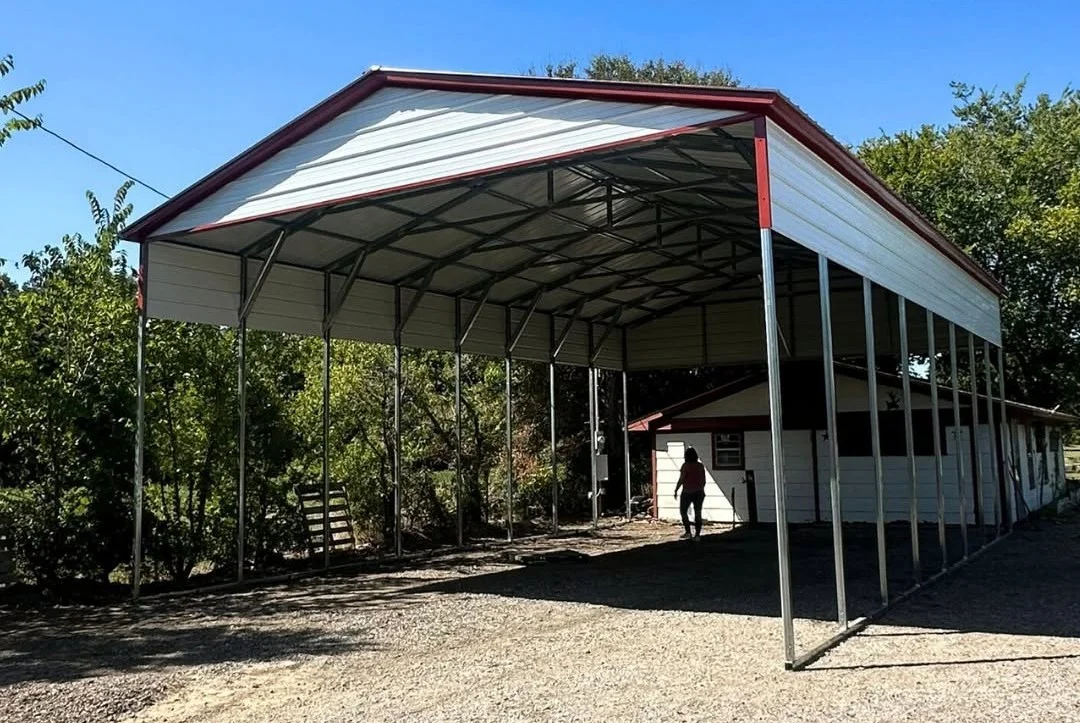
5 proven winter boat storage options compared
| Option | Protection | Trade-offs |
|---|---|---|
| 1. Heated indoor storage at a marina | Highest: no freezing, no snow, secure | Highest recurring cost; limited space; no access until spring launch |
| 2. Unheated indoor or rack storage | Very good: out of snow, wind and sun | Paid every season; boat still needs full winterizing; little or no access |
| 3. Outdoor lot with shrink wrap | Moderate: sheds snow if framed well | Wrap is replaced every year; cover carries the whole snow load |
| 4. Driveway with a tarp or fitted cover | Basic: depends entirely on the cover | Needs checking after every storm; some townships restrict boats parked in front yards |
| 5. Your own steel cover or building | Very good to excellent: an engineered roof takes the snow instead of the boat | One-time purchase; needs space and a suitable site |
There is no single best answer. Paid indoor storage makes sense when you have no room at home. But if you pay for winter boat storage every single year, it is worth comparing a few seasons of fees against a structure you own and can use year-round.
Why a steel cover changes winter boat storage at home
Most at-home damage comes from one cause: the cover is being asked to act as a roof. Put a real roof over the boat and the cover only has to keep out dust and animals.
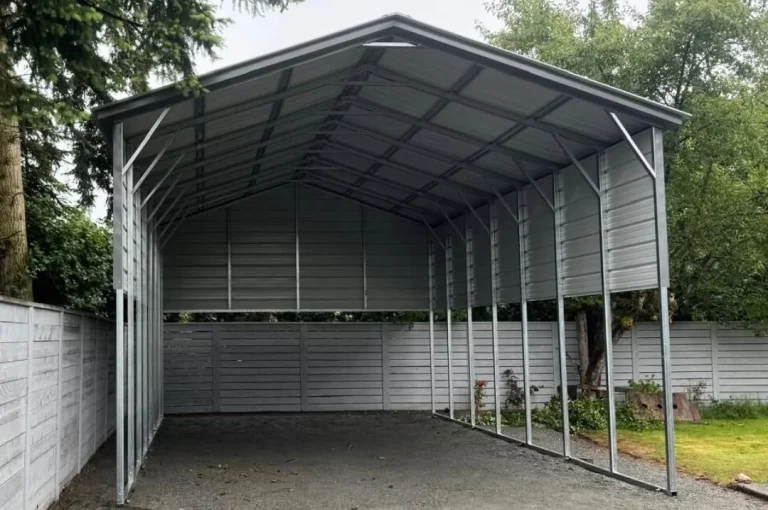
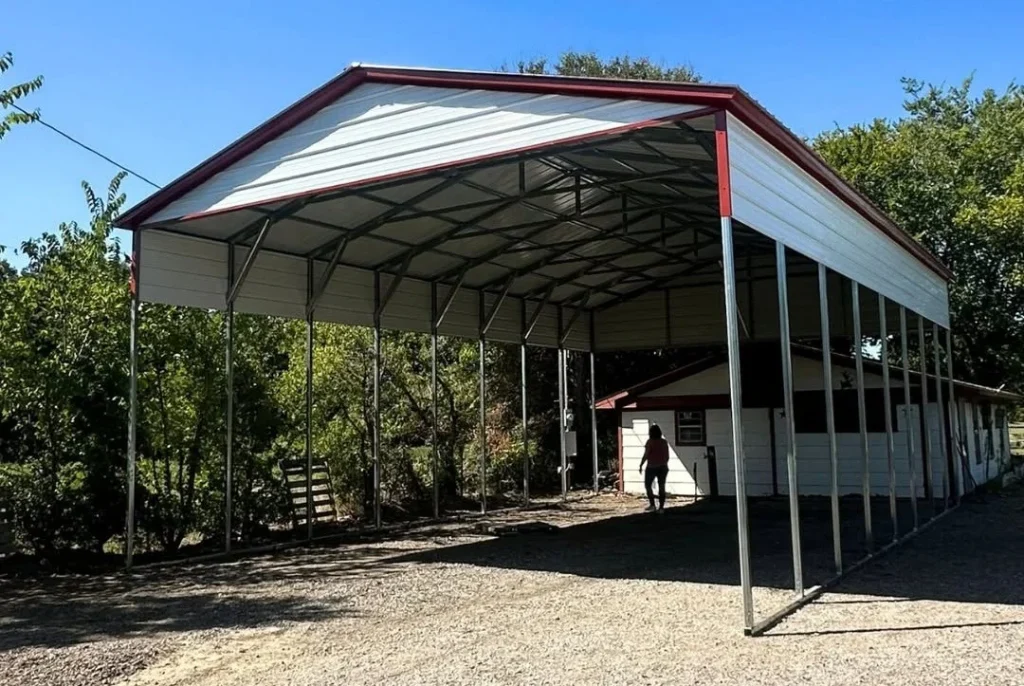
Our RV carports are extra-tall covers sized for RVs, boats and oversized equipment, so the same structure works for a pontoon, a fishing boat on a trailer or a cruiser with a tower. Every one is engineered for the snow load and wind of your county and stamped by a licensed engineer.
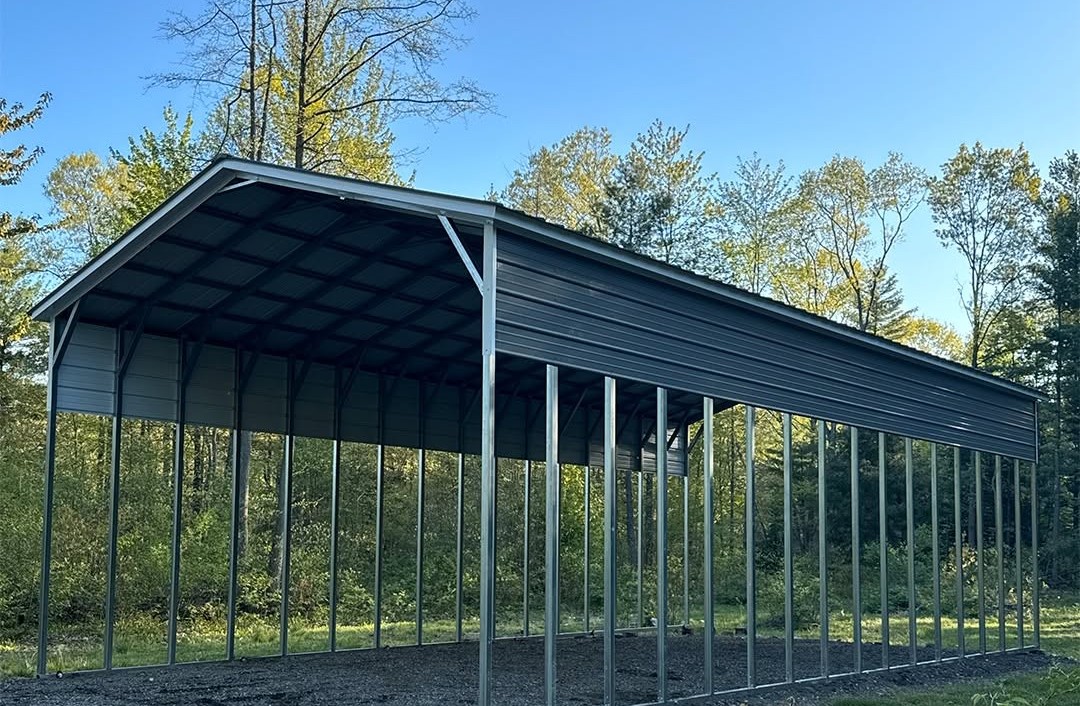
Open, partly enclosed or fully enclosed
- Open cover. Roof and legs only. Easy to back a trailer into, and the lowest cost.
- Partly enclosed. Panels on one to three sides block drifting snow and wind-driven rain while the front stays open.
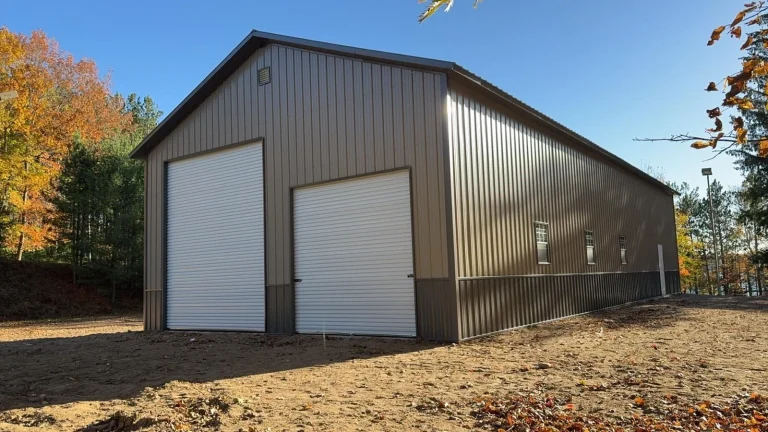
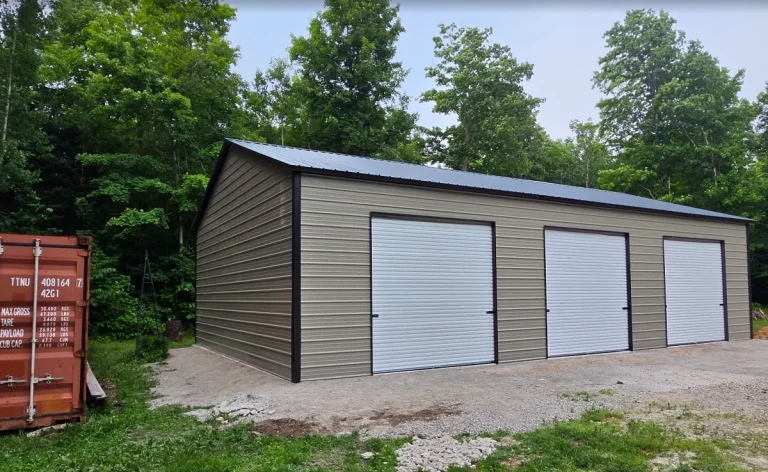
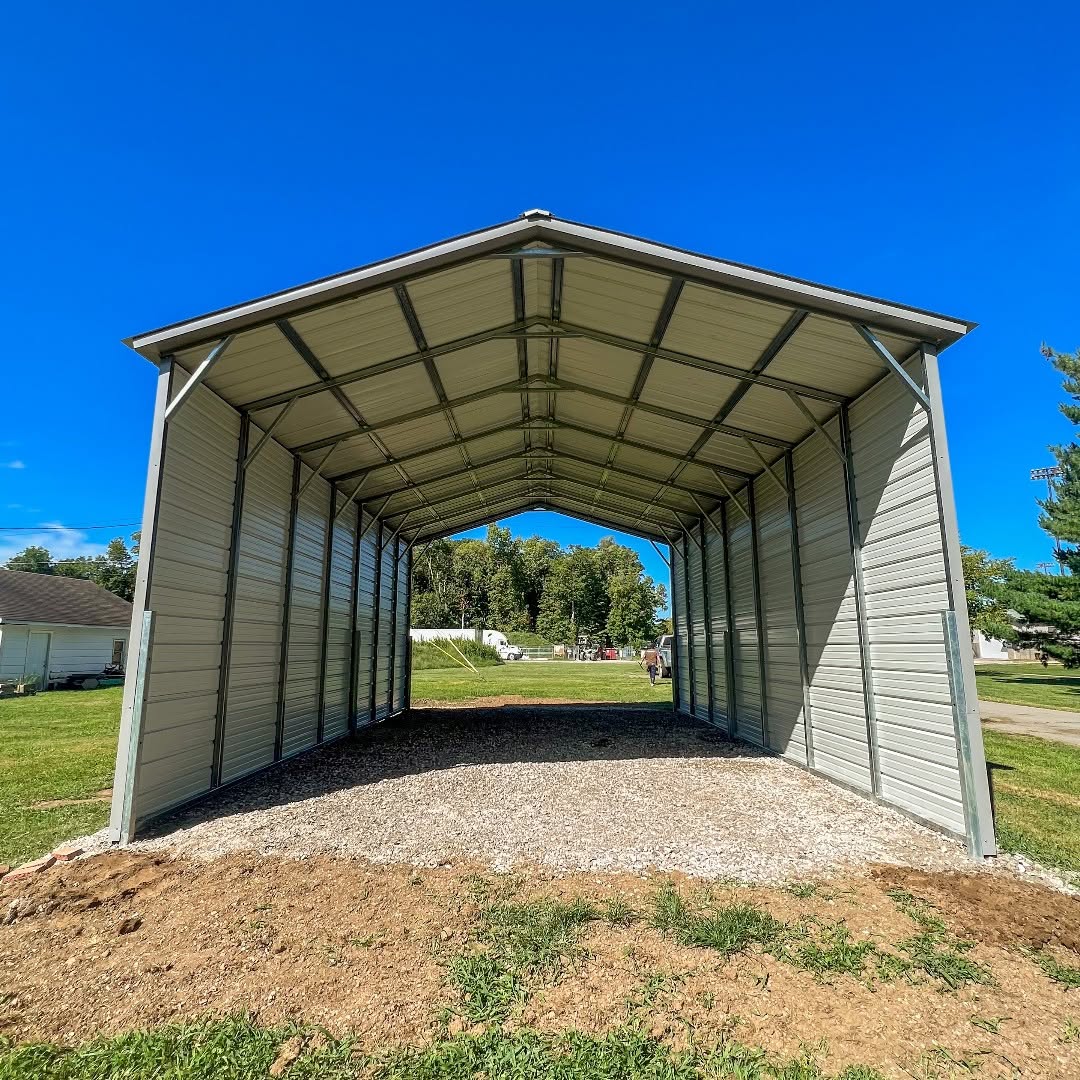
- Fully enclosed. Walls and a door make it lockable winter boat storage with room for motors and gear. At that point you are looking at one of our steel garages.
You can start with an open design and add walls and doors later.
How to size winter boat storage for your boat
Measure the boat the way it will be parked: on its trailer, with the motor and any top in the storage position.
- Length. From the trailer tongue to the back of the motor or swim platform. Add a few feet to walk around.
- Width. The widest point, including trailer fenders and guide posts, plus room on both sides.
- Height. The tallest point on the trailer: tower, T-top, radar arch or folded bimini. Compare it with the clearance at the side of the building, which is lower than at the peak.
Then think about what else belongs there. Many owners end up sharing the space with a camper, a snowmobile trailer or the car they put away for the season. If that sounds familiar, our guide to winter car storage covers the vehicle side.
A roof does not replace winterizing
No building protects an engine block or plumbing from freezing. Winterize the boat the way the manufacturer recommends before it goes under cover. Discover Boating’s winterizing guide covers the standard steps: stabilize the fuel and run the engine so it circulates, drain water from the engine and any livewells or washdown systems, protect plumbing with non-toxic antifreeze, and pull the drain plug once the boat is on land.
If you cover an outboard, leave ventilation so condensation can escape.
Planning and timing in Michigan
We install year-round. Standard carports and garages usually go up within a few days to a week once materials are on site. Site work is the weather-dependent part: frozen ground and snow can delay a gravel pad or a slab, so earlier is easier.
Buildings can be installed on gravel, concrete or asphalt, and we help you choose the right base. Permit rules differ by township and county, and we help confirm what applies before the project starts. If you would rather spread the cost, see our financing options.
Winter boat storage: quick answers
Where is the best place to store a boat in winter?
Anywhere it is winterized, properly supported on its trailer and kept out of snow, ice and standing water. Indoor storage and a roofed structure at home both do that.
Is an open cover enough, or do I need walls?
A roof handles the main job, which is keeping snow and ice off. Walls add security and stop drifting snow. Many owners begin open and enclose later.
Do I still need a boat cover under a steel roof?
Yes, a fitted cover still keeps out dust, leaves and animals. It just no longer has to carry snow.
Bring your winter boat storage home
Send us the length, width and height of your boat on its trailer, and we will size a steel cover or enclosed building around it. Request your free, itemized quote or call (313) 986-1014 and a Michigan-based specialist will get back to you within one business day.
This article is general information. Sizing, snow and wind engineering, site requirements and local permit or parking rules should be confirmed for your property with our team and your local building department.