Every steel building we quote in Michigan starts with one number: the snow load for the place it will stand. That number decides how heavy the frame must be, how far apart the trusses or bows can sit, and ultimately what the building costs. The Michigan snow load varies more than most people expect. A garage in Monroe and the same garage in Calumet are designed for very different winters. This guide explains where the official numbers come from, what they are in each region of the state, and how they affect your project.
1. Michigan snow load starts with the ground, not the roof
Codes begin with a ground snow load: the weight of snow expected on the ground at a location, in pounds per square foot (psf), based on long-term weather records. Engineers then convert it to a roof snow load, adjusting for roof slope, how exposed the building is to wind, whether it is heated, and drifting next to taller walls or roofs.
So when you see “40 psf” for a county, that is the starting point for the engineering, not the final roof design.
2. Michigan publishes ground snow loads by county
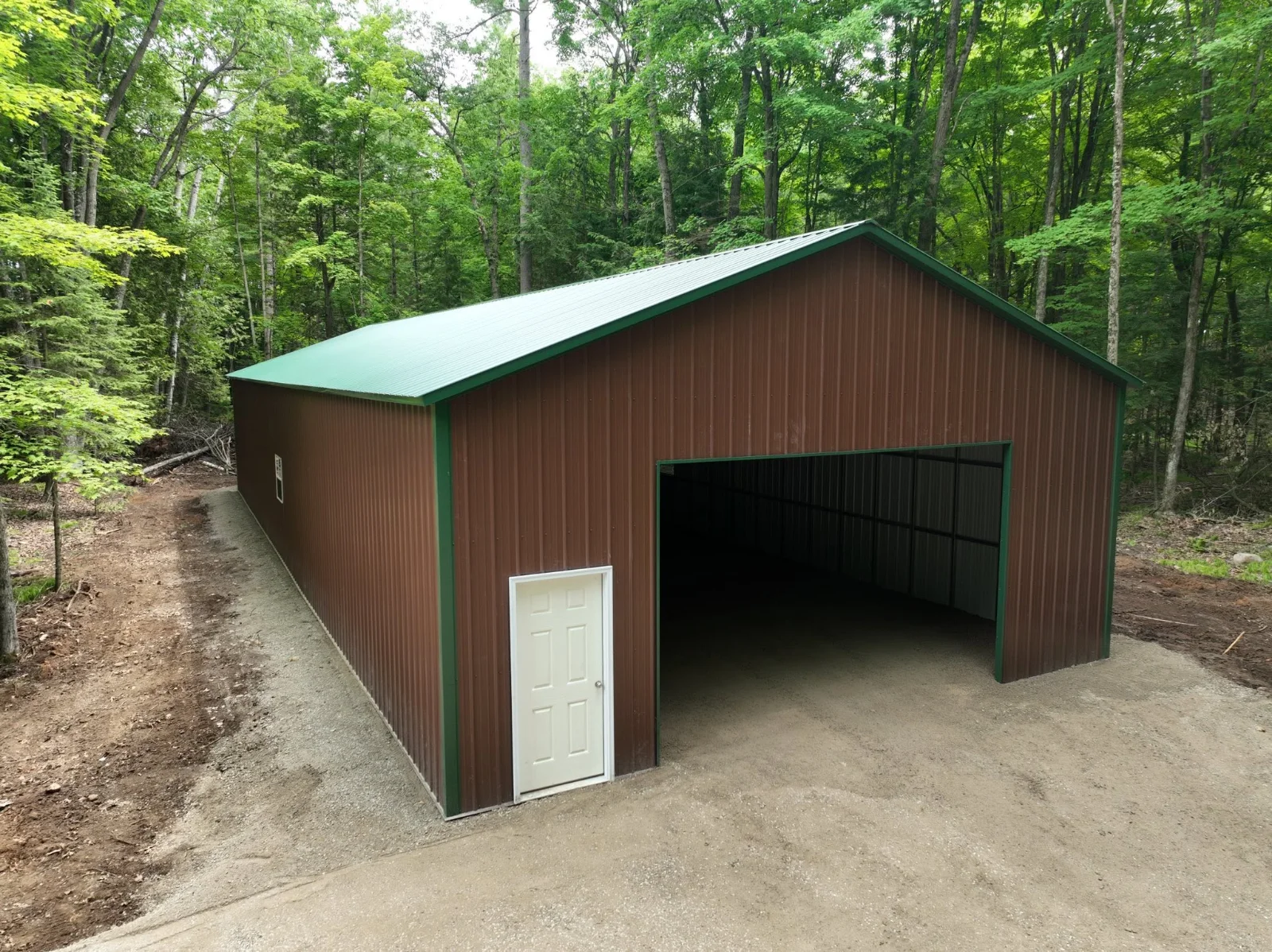
For one- and two-family dwellings, the Michigan Residential Code sets ground snow loads in Table R301.2(5), “Michigan Ground Snow Loads by Jurisdiction.” The current version of the rule, Mich. Admin. Code R 408.30515, took effect on August 29, 2025. It lists a value for every county, with exceptions for specific cities, villages and townships.
That table is written for homes. Garages, barns and other buildings are designed under the code that applies to them, and your building department confirms which values it expects. In practice, the county table is the clearest public picture of how Michigan snow load changes across the state.
3. Michigan snow load by region
The Michigan snow load values below are ground snow loads in psf, taken from the state table. Where a county lists exceptions, the range is shown. Always check your exact township, because a few miles can change the number.
| Region | Examples (county: ground snow load, psf) |
|---|---|
| Metro Detroit | Wayne: 20 (Northville 25) · Monroe: 20 · Oakland: 25 · Macomb: 25 · Livingston: 25 · Washtenaw: 25 (20 in Ann Arbor, Saline, Ypsilanti and nearby townships) |
| Mid-Michigan | Jackson: 25 · Ingham: 25 (30 in Lansing, East Lansing and nearby) · Clinton: 30 to 35 · Genesee: 30 (25 in some areas) · Saginaw: 35 (30 in some areas) · Isabella: 40 (35 in some areas) |
| West Michigan | Kalamazoo: 30 to 35 · Kent: 35 (40 in northern areas) · Allegan: 50 (35 inland) · Ottawa: 50 (35 to 40 inland) · Muskegon: 40 to 60 · Berrien: 50 |
| Northern Lower Peninsula | Otsego: 50 to 60 · Wexford: 60 · Grand Traverse: 60 · Antrim: 60 to 70 · Charlevoix: 70 · Emmet: 70 |
| Upper Peninsula | Delta: 60 to 70 · Gogebic: 60 · Marquette: 70 (60 in some townships) · Chippewa: 70 · Houghton: 80 (70 to 90) · Keweenaw: 90 (100 in some townships) |
The pattern of Michigan snow load is easy to see. The southeast corner carries the lightest loads. Values climb toward the Lake Michigan shoreline, where lake-effect snow piles up, and through the northern Lower Peninsula. The Keweenaw Peninsula has the highest figures in the state.
4. What those numbers weigh in real snow
A psf number is easier to picture as snow. University of Wisconsin Extension guidance on snow loads estimates light snow at about 5 to 20 psf per foot of depth, packed snow at about 20 to 40, and ice at about 58. So 20 psf can be several feet of fresh powder or less than a foot of wet, packed snow with ice in it. Late-season rain on an existing snowpack is often what pushes roofs to their limits.
5. How Michigan snow load shapes your building
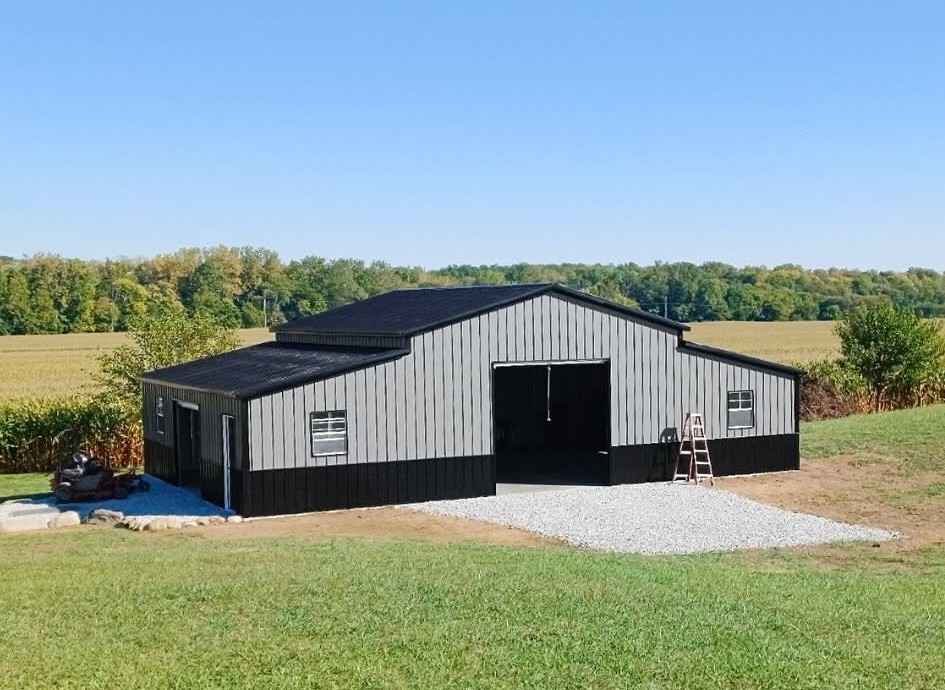
Every structure we install is engineered to meet or exceed the snow load and wind rating for its specific county and comes stamped by a licensed engineer. That is why two identical sizes can price differently in Detroit and in the Upper Peninsula. A higher load usually means:
- Closer framing. Bows, trusses or posts are spaced closer together.
- Heavier members. Thicker steel or larger lumber in the frame.
- More bracing and stronger connections.
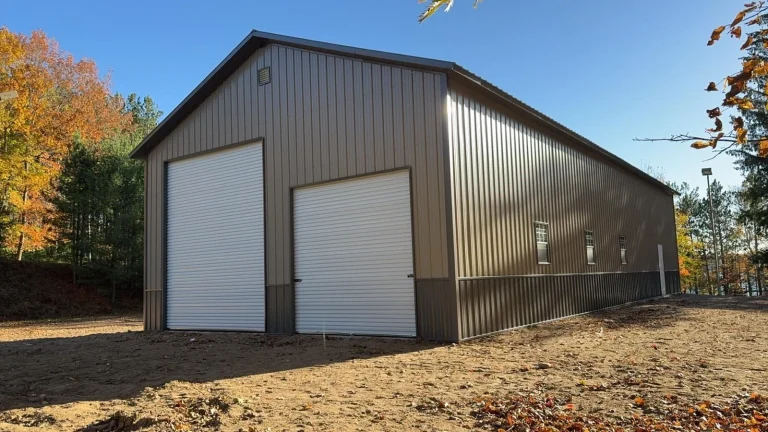
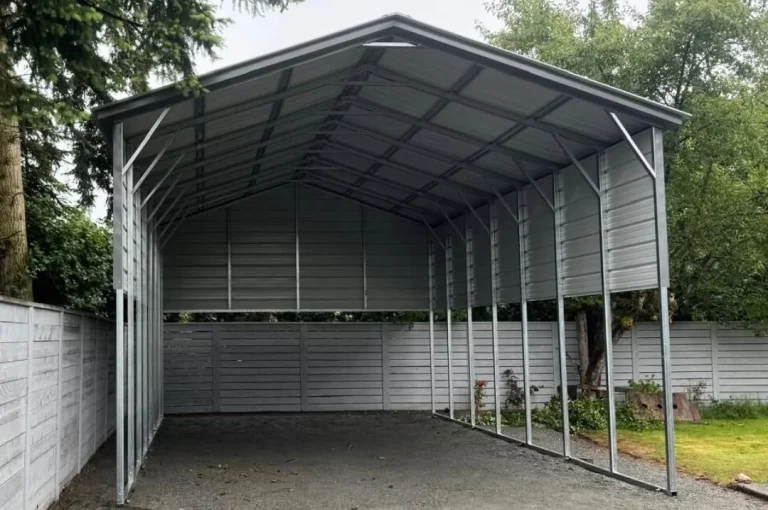
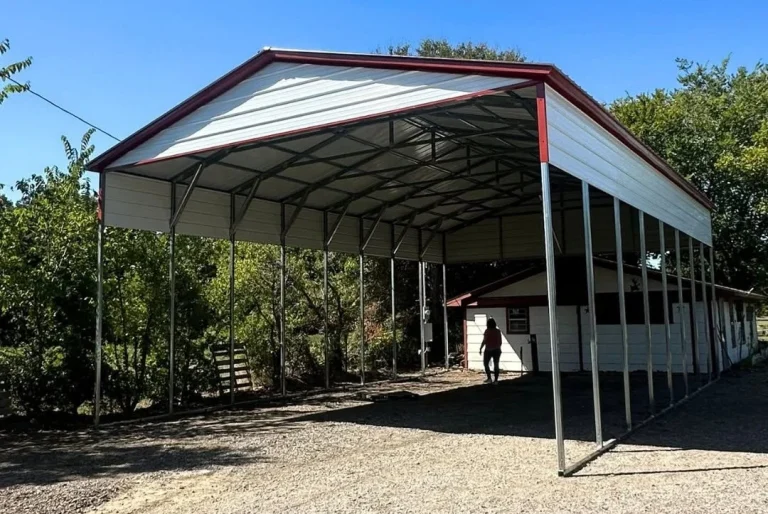
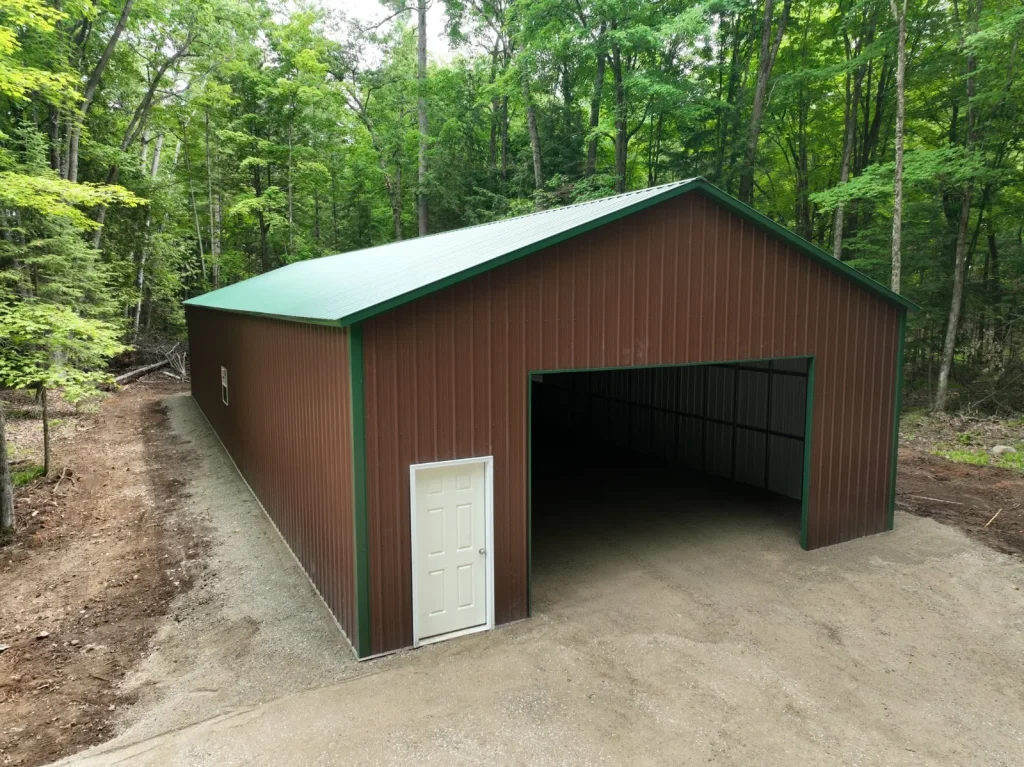
- A roof that sheds well. A vertical roof lets snow slide off the sides; see the roof options on our building styles page.
Lean-tos and lower roofs next to taller walls deserve extra attention, because snow slides and drifts onto them. We account for that on barns and other buildings with attached roofs.
Michigan snow load and your permit
Where a permit is required, the building department will usually ask for drawings that show the design loads. Engineer-stamped plans make that step much simpler. Permit rules themselves vary by township and county; our guide to permits for a metal building in Michigan covers the basics, and we help confirm what your address requires.
Michigan snow load: quick answers
What is the snow load in Michigan?
It depends on where you are. State ground snow loads range from 20 psf in parts of southeast Michigan to 100 psf in parts of Keweenaw County.
Is ground snow load the same as roof snow load?
No. The roof load is calculated from the ground load and adjusted for slope, exposure, heating and drifting.
Where do I find the number for my address?
Your local building department enforces the requirement. When you request a quote, we research it and engineer the building to it.
Should I clear snow off a building designed for Michigan snow load?
A building engineered for your county should not normally need it. If you ever see sagging or hear creaking, keep people out and call for an inspection.
Build for your county’s Michigan snow load
Send us your size and county, and we will engineer the frame for your local snow load and wind rating. Browse our steel buildings. Request your free, itemized quote or call (313) 986-1014 and a Michigan-based specialist will get back to you within one business day.
This article is general information. Snow and wind design loads for your exact location, engineering details and permit requirements should be confirmed for your property with our team and your local building department.