A camper or motorhome is one of the biggest purchases most families make, and in Michigan it spends half the year parked under snow. Metal RV covers exist to fix that: a permanent steel roof, tall enough to drive under, that keeps snow, ice, sun and falling branches off the rig. They are simple structures, but the details matter. Here are seven things to get right before you order one.
Metal RV covers vs. fabric covers
A fitted fabric cover is cheaper up front, and it works for dust and light weather. In a Michigan winter it has three weaknesses. It carries the snow directly on the RV roof. It traps moisture against seams and seals if it does not breathe. And it has to be put on and taken off every time you use the rig, which on a tall fifth wheel is nobody’s favorite job.
A steel cover never touches the RV. Snow lands on an engineered roof, air moves freely underneath, and you just drive in. That is why owners who plan to keep an RV for years usually end up with a permanent structure.
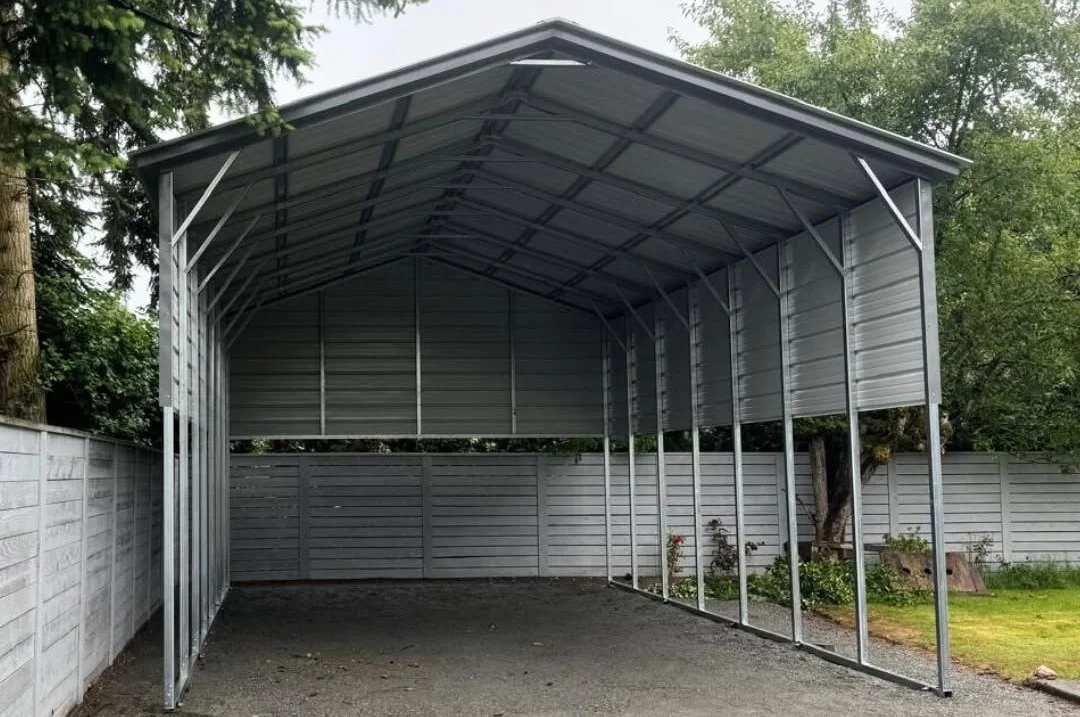
7 essential things to check before buying metal RV covers
1. Height: measure the RV, not the brochure
Measure from the ground to the tallest point on the roof: usually the air conditioner, a vent cover or a satellite dome. Many motorhomes and fifth wheels stand 12 to 13.5 feet tall. Then compare that number with the clearance at the side of the cover, where the roof is lowest, and leave at least a foot of margin.
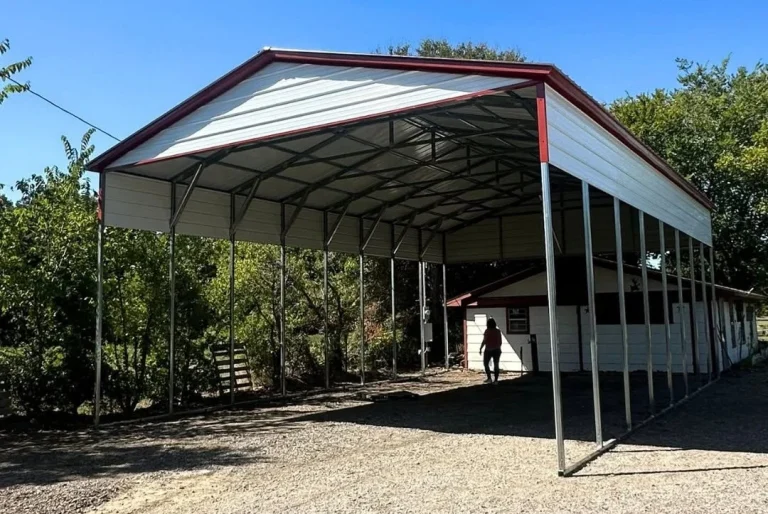
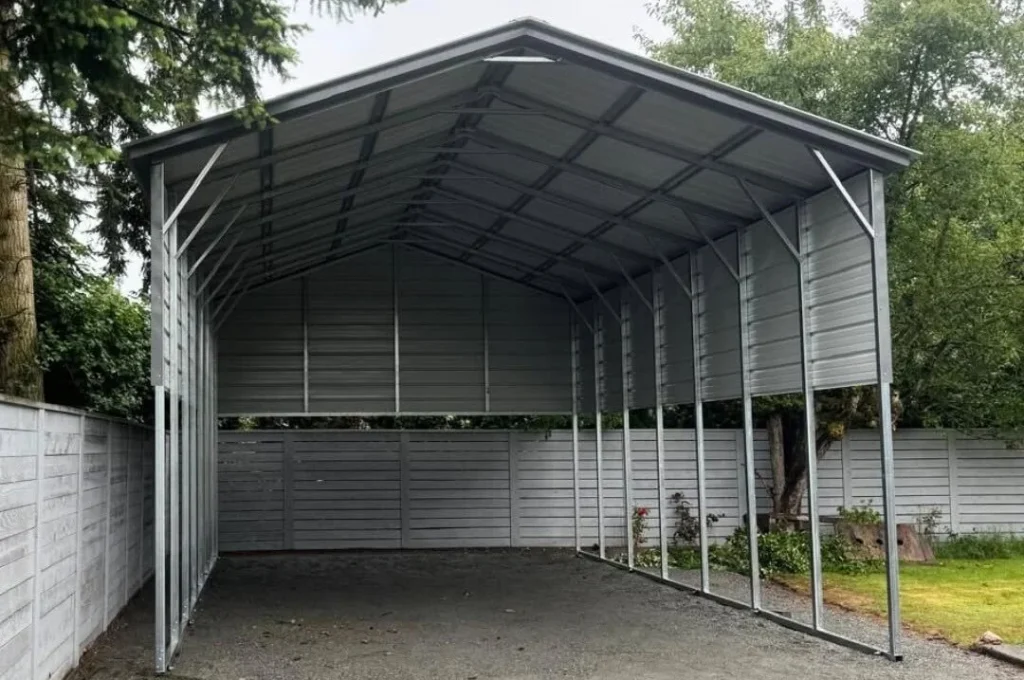
The RV carports we install use tall legs for exactly this reason, with common heights of 12 to 15 feet.
2. Length and width: leave room to live with it
Length should cover the whole rig, including the hitch or tongue and any rear ladder or bike rack. For width, 12 feet covers the RV itself. Go to 18 or 20 feet and you can open slide-outs, awnings and doors under the roof, and walk around with a hose.
| RV type | What to measure | Typical cover size to start from |
|---|---|---|
| Travel trailer | Tongue to bumper; roof AC height | 12 to 18 ft wide, 30 to 35 ft long, 12 ft legs |
| Fifth wheel | Pin box to bumper; tallest roof point | 18 to 20 ft wide, 35 to 40 ft long, 13 to 14 ft legs |
| Class A motorhome | Bumper to ladder; roof equipment | 18 to 24 ft wide, 40 ft long, 14 to 15 ft legs |
| Class C or camper van | Overall length; roof vents | 12 to 18 ft wide, 25 to 35 ft long, 12 ft legs |
Treat the table as a starting point. Your tape measure decides.
3. Roof style
We build regular, boxed-eave and vertical roofs. On a vertical roof the panels run from the ridge down to the eaves, so snow and water slide off instead of sitting on horizontal seams. For long, tall metal RV covers in snow country, vertical is the roof we recommend.
4. Engineering for your county
Snow weight adds up fast. University of Wisconsin Extension guidance on snow loads puts packed snow at roughly 20 to 40 pounds per square foot for every foot of depth. A tall cover also catches more wind than a low carport.
Every structure we install is engineered for the snow load and wind rating of the county it stands in and stamped by a licensed engineer. A cover built for Monroe County is not automatically right for Marquette County.
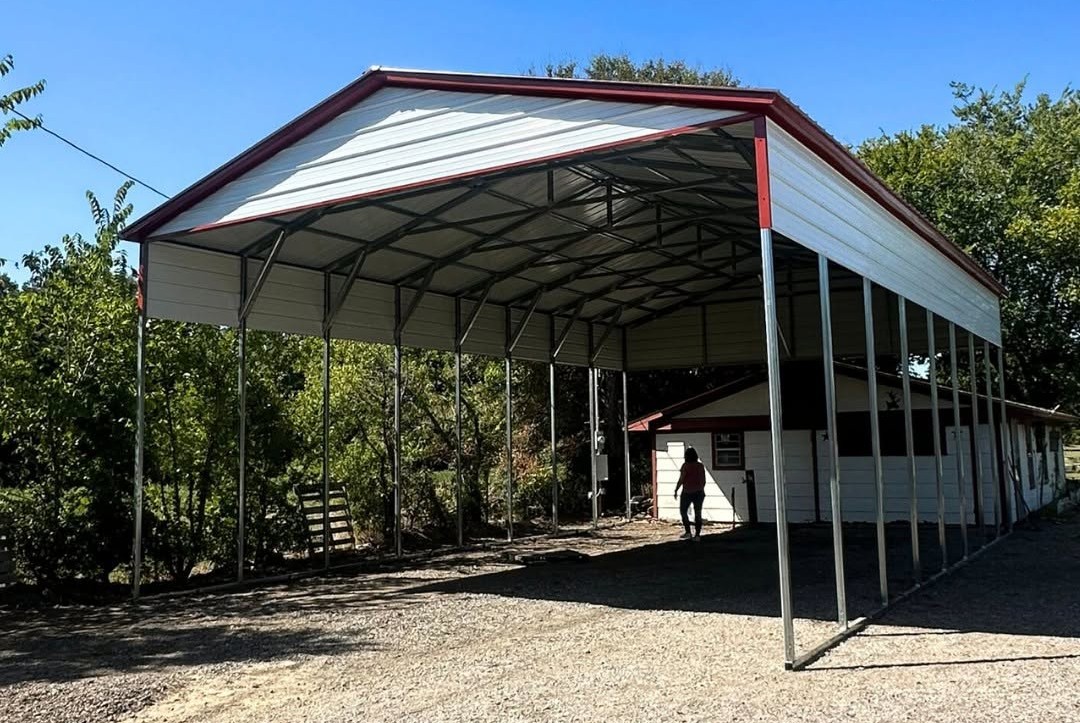
5. Open sides or partial walls
An open cover is the easiest to back into. Adding panels to one or both sides blocks drifting snow and low sun, and enclosing the ends turns it into a full RV garage. You can start open and add walls later, so this does not have to be decided on day one.
6. The base under it
Metal RV covers can be installed on gravel, concrete or asphalt. A compacted gravel pad drains well and is the most common choice. Concrete is cleaner for maintenance work and for hooking up. Either way, the pad must be level, and the approach has to be wide enough to swing the rig in without clipping a leg.
7. Permits and placement
Permit and setback rules for accessory structures vary by township and county. Height limits matter more for RV covers than for ordinary carports. We help confirm what applies at your address before the project starts.
What affects the price of metal RV covers
Size is the biggest factor, and height counts as much as footprint: taller legs mean more steel and more bracing. After that come roof style, steel gauge, your county’s snow and wind requirements, and any side panels or end walls.
We provide a full itemized quote before you commit to anything. If you prefer to spread the cost, our financing and rent-to-own plans run from 12 to 84 months.
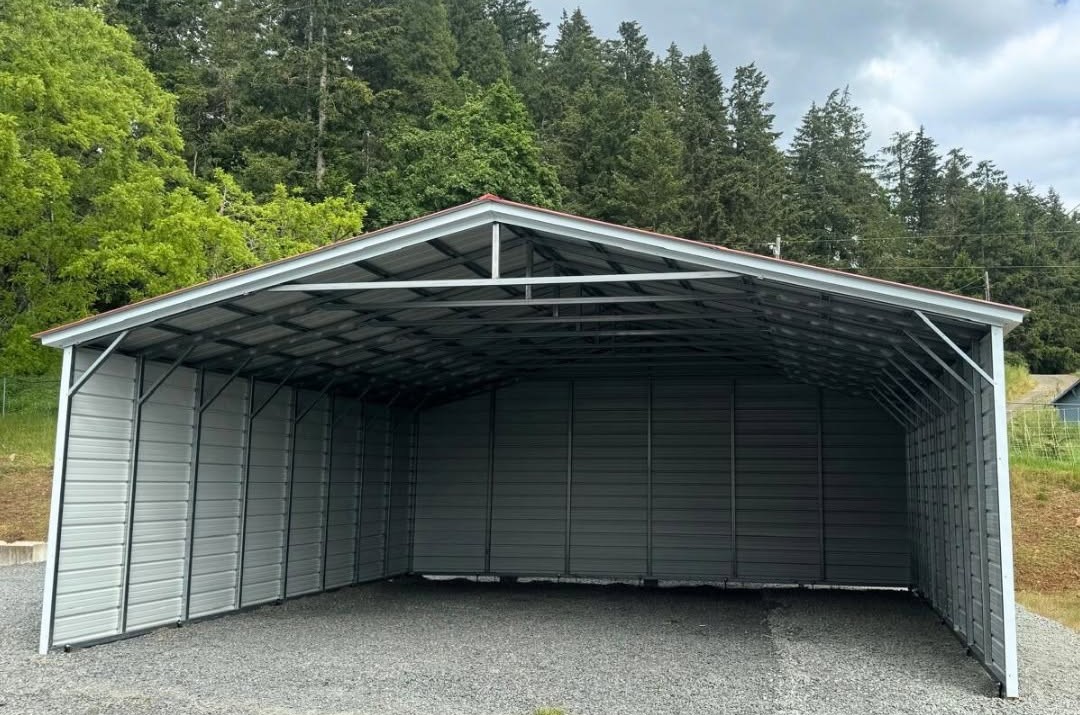
Metal RV covers: quick answers
Is it a good idea to cover an RV?
Yes. Keeping snow, standing water and UV off the roof protects seals, vents and finishes, which are the parts that fail first on a stored RV.
What is the best material for an RV cover?
For permanent protection in a snow climate, an engineered steel structure. Fabric covers suit short-term or mild-weather storage.
Can a boat or tractor share the cover?
Often, yes. The same tall structure suits boats and equipment. See our guide to winter boat storage for sizing tips.
How long does installation take?
Most standard carports are installed within a few days to a week once materials arrive, depending on size and site preparation.
Get metal RV covers sized for your rig
Send us your RV type and its measured height and length, and we will recommend a cover that fits. You can also browse our RV carports first. Request your free, itemized quote or call (313) 986-1014 and a Michigan-based specialist will get back to you within one business day.
This article is general information. Clearances, snow and wind engineering, pricing and local permit or height rules should be confirmed for your property with our team and your local building department.